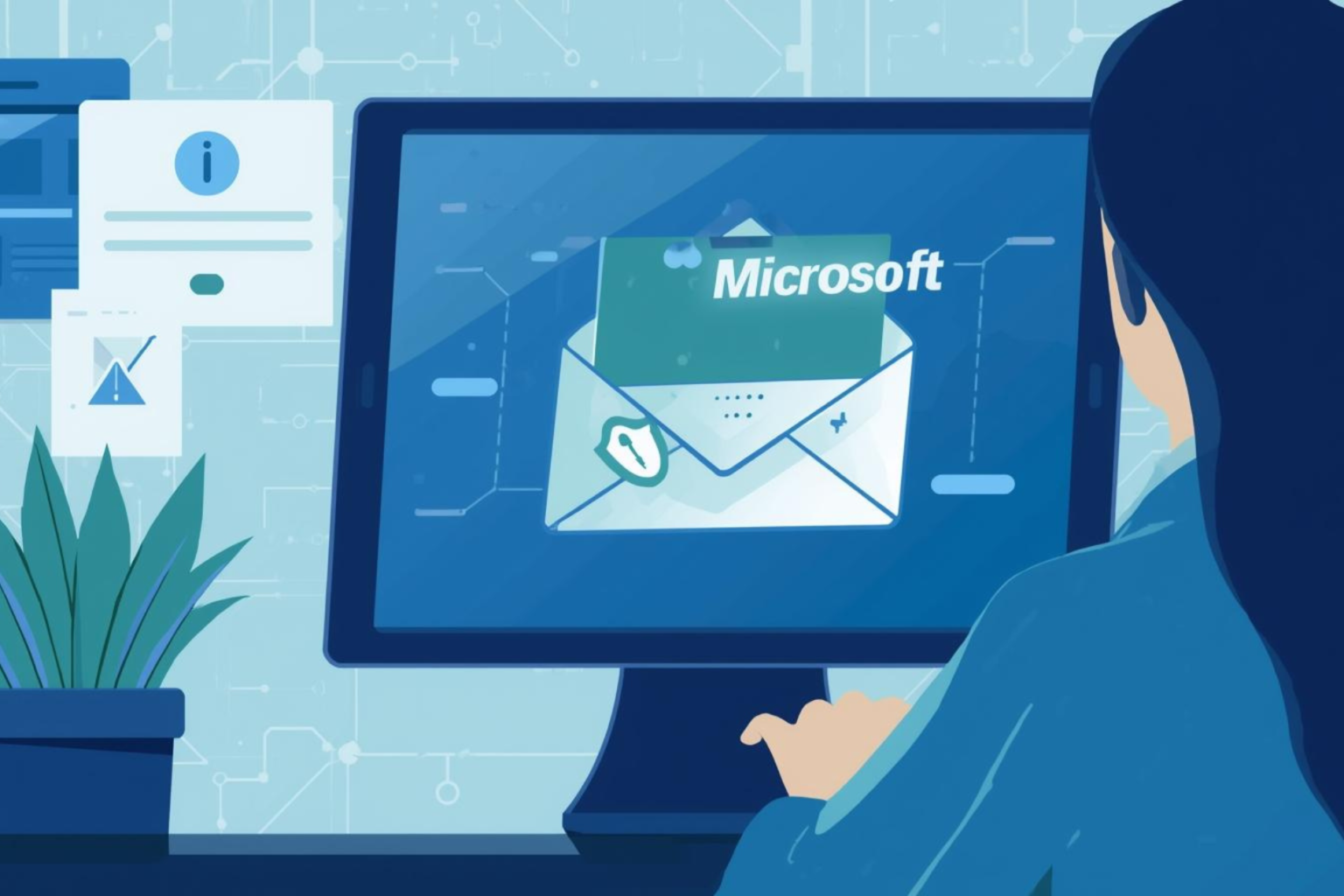
Microsoft is one of the biggest, most trusted tech companies in the world.
But this makes it an easily impersonable company due to the trust people place with it.
Why scammers impersonate Microsoft…
Cyber criminals often use well-known brands to trick people. Microsoft is now the top company scammers impersonate in phishing scams worldwide.
A Check Point Research study found that 36 percent of brand-related phishing attacks in early 2025 involved impersonating Microsoft.
This means many phishing scams use fake Microsoft accounts, putting your business at risk.
Google, Apple, and Microsoft account for over half of all phishing scams.
Why is this escalating now—and what must you do to defend your business?
What phishing actually is…
Phishing happens when someone tries to trick you by sending a fake email, text, or message that looks like it comes from a company you recognize and trust.
The aim is to trick you into clicking a link, opening a harmful attachment, or giving away sensitive details like your passwords, credit card numbers, or even your full identity.
If this happens, you could lose money instantly, face hacked systems, or suffer severe data leaks. The consequences could cripple your business.
Even more concerning, phishing emails are becoming harder to spot. They have fewer spelling errors and look much more real than before.
Scammers copy logos, create fake websites, and use email addresses that appear to be real to impersonate companies like Microsoft, Google, or Apple.
In fact, researchers recently found a rise in phishing attacks impersonating Mastercard. Fake websites are tricking people into entering their card details.
This trend is concerning because it shows that cyber criminals are always looking for new ways to trick people.
How can you tell if an email from Microsoft is genuine or a scam?
It’s about taking your time and staying alert.
- Look out for certain keywords; real Microsoft emails will not ask you to take immediate action or make quick decisions, such as “Click this link immediately or your account will be locked.” That kind of language is a big red flag.
- Take a moment to double-check the sender’s email address. Sometimes, it looks correct at first, but small changes can be easy to miss. For example, you might see “micros0ft.com” instead of “microsoft.com.” Scammers count on people overlooking these tiny differences.
- And if you are unsure, don’t click any links or give out any information. If in doubt, open your browser and enter the official website address yourself. This is the safest option.
It can be annoying to stay cautious, but dealing with a cyber-attack is much more of a headache.
How to protect yourself and your business…
Phishing scams are only going to get more sophisticated and convincing. It is critical that you:
- Stay alert
- Invest in good cybersecurity tools.
- Add extra security by enabling features such as multi-factor authentication. This means you’ll need two ways to prove your identity when you log in, not just a password.
Keep in mind that well-known brands are often targeted by scammers. If you get an email that seems to be from Microsoft, be careful—it could be a scam.
Contact us today to find out how we can help protect your business and train your team to spot and prevent phishing scams.